Over the course of my career, I’ve worked across a wide range of content management systems including WordPress, Sitecore, Drupal, SharePoint, and Webflow.
Each platform approaches the web differently, but one thing I’ve learned is that knowing how to use a CMS is only part of the job.
At the enterprise level, the more important questions are often:
- How should the platform be structured?
- How do you keep it maintainable as the site grows?
- How do designers, developers, and marketers work together without creating technical debt?
- How do you establish standards around accessibility, SEO, performance, localization, and analytics?
- How do you give teams more autonomy without sacrificing governance?
Those questions have become especially relevant as we prepare to migrate the Billtrust global marketing website from WordPress to Webflow as part of a complete website redesign.
Returning to Webflow
I’ve worked with Webflow previously, primarily on smaller projects, but my recent enterprise work has been much more heavily focused on platforms such as WordPress and Sitecore.
With Webflow becoming part of my day-to-day work again, I wanted to do more than simply refresh my familiarity with the Designer.
I wanted to understand how Webflow itself recommends building and operating websites today.
The platform has evolved considerably, and so have the expectations placed on modern marketing websites. Enterprise sites now need to support increasingly sophisticated design systems, content operations, localization, analytics, experimentation, SEO, accessibility, performance, and collaboration across multiple teams.
That led me to the Webflow Way.
What is the Webflow Way?
The Webflow Way is Webflow’s collection of best practices for building, managing, and optimizing scalable websites.
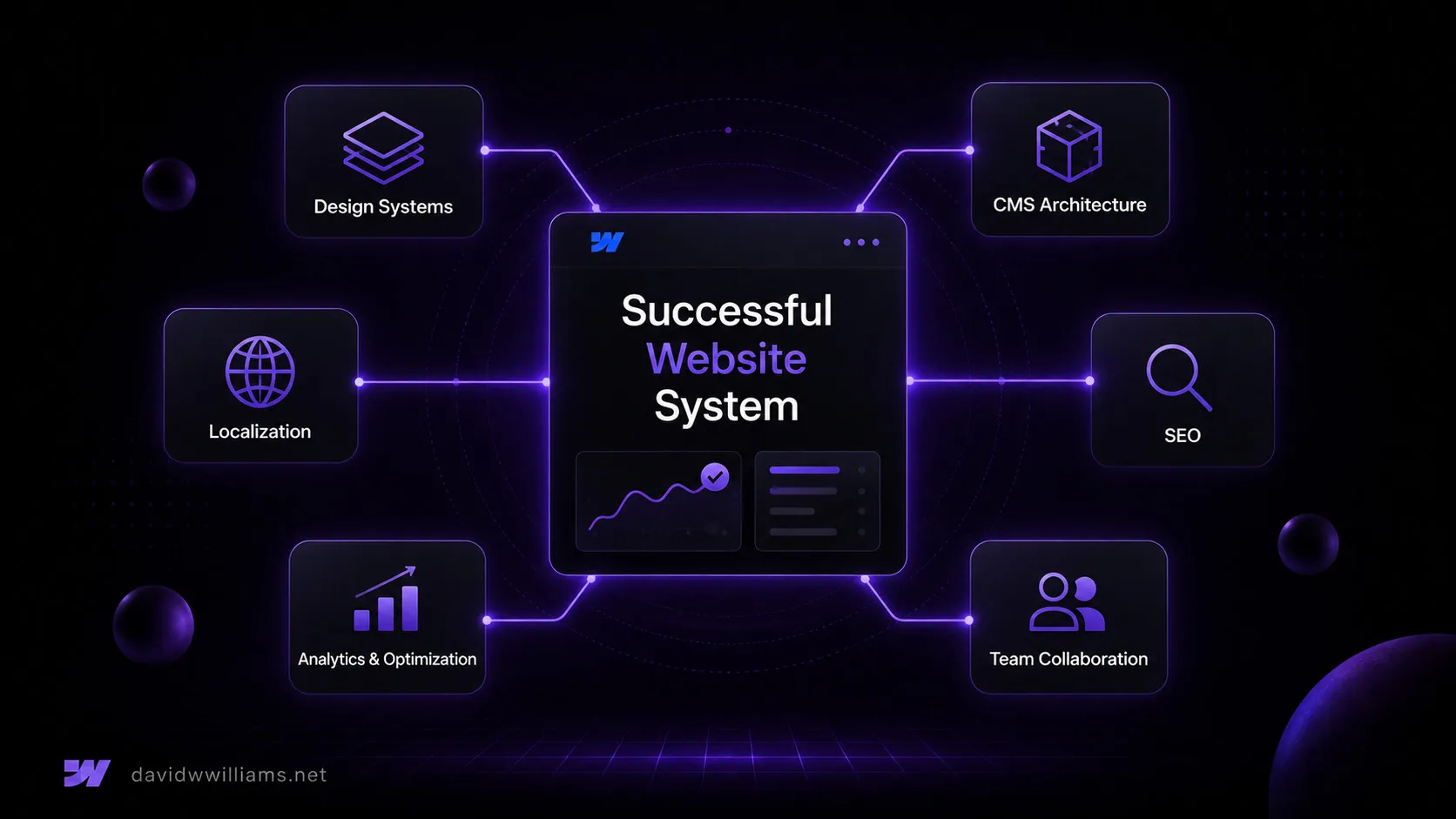
Rather than focusing solely on how individual Webflow features work, the material looks at the larger system surrounding a successful website, including:
- Design systems
- CMS architecture
- Localization
- SEO
- Analytics and optimization
- Team collaboration
That distinction was important to me.
Learning where a button is located or how to configure a component is relatively straightforward. Understanding how those decisions affect a website six months or several years later is much more valuable.
Looking at Webflow through an enterprise lens
One of the advantages of working across multiple CMS platforms is being able to separate platform-specific implementation from broader web architecture principles.
A design system may be implemented differently in Webflow than in WordPress or Sitecore, but the underlying goal is still consistency, scalability, and maintainability.
The same applies to content modeling, governance, localization, SEO, accessibility, analytics, and performance.
As I worked through the Webflow Way material, much of what interested me wasn’t simply learning Webflow functionality. It was comparing Webflow’s recommended approach with patterns I’ve encountered while building and managing large websites throughout my career.
That broader perspective becomes especially useful during a platform migration.
Instead of asking:
“How do we recreate what we had in Webflow?”
I think the better question is:
“How should we take advantage of this platform while preserving the architectural and governance principles that make an enterprise website sustainable?”
Those are two very different approaches to a migration.
Validating the fundamentals
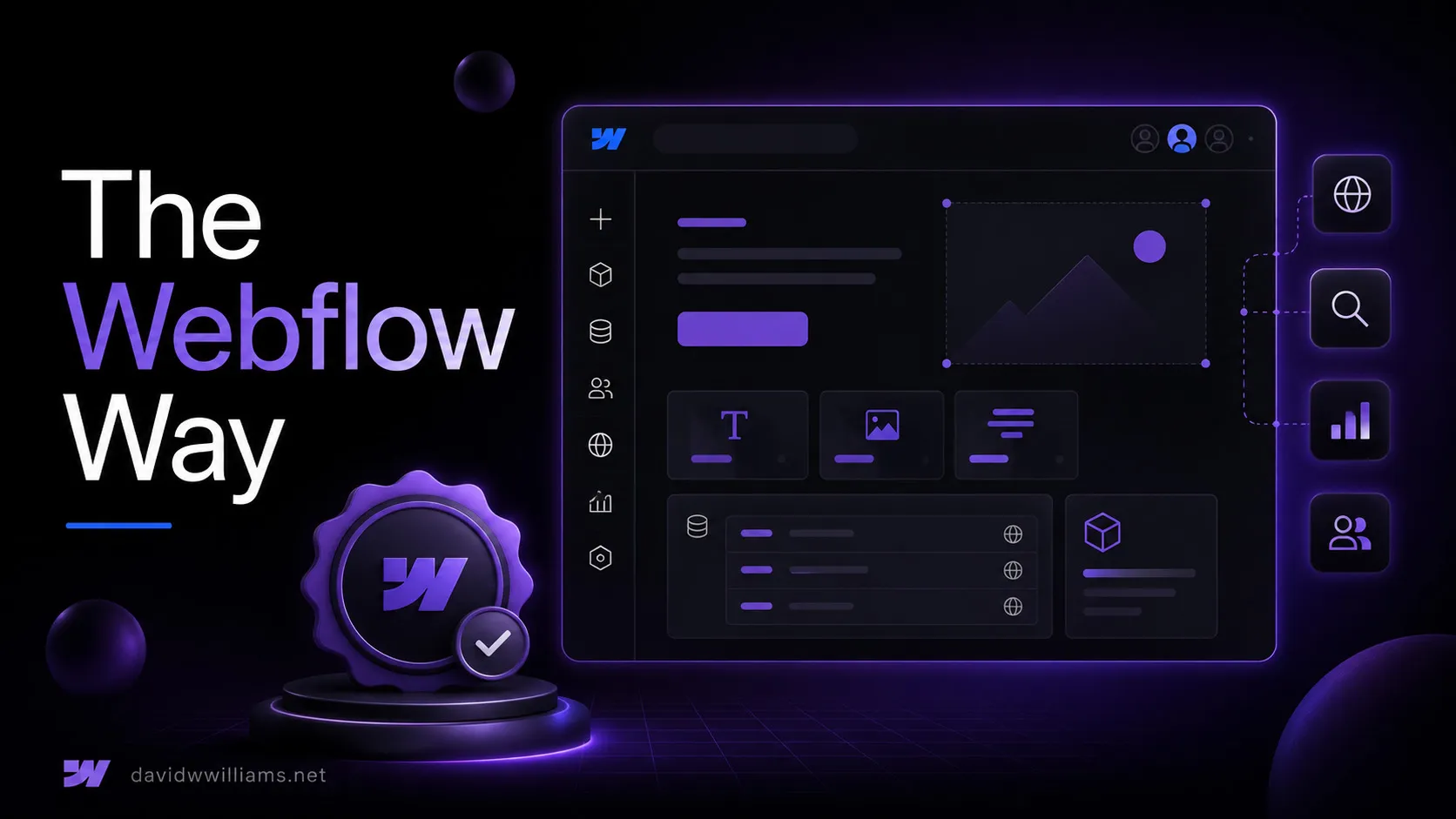
After completing the Webflow Way material, I took the Webflow Way assessment and earned the Webflow Way badge.
The badge itself is great to add to my credentials, but the more valuable part was validating that my approach to enterprise web development aligns closely with Webflow’s current recommended practices.
For me, professional development like this isn’t about collecting certifications.
It’s about making sure that experience doesn’t turn into assumptions.
Web platforms change quickly. Features evolve, workflows improve, new capabilities emerge, and best practices change with them. Even after working in web technology for more than 17 years, I think there’s tremendous value in periodically going back to the source and challenging how you approach a platform.
Platform expertise vs. platform dependency
I’ve never viewed myself specifically as a WordPress developer, Sitecore developer, or Webflow developer.
The platform is a tool.
My role has increasingly been to understand how technology, business requirements, marketing operations, user experience, data, and governance fit together and then determine how a platform can support those needs.
Having experience across multiple CMS platforms helps tremendously.
I’ve seen different approaches to:
- content architecture
- component systems
- publishing workflows
- infrastructure
- localization
- personalization
- analytics
- SEO
- accessibility
- performance
- governance
That makes it easier to recognize both the strengths and limitations of a particular platform and make better architectural decisions around it.
Webflow is now another important part of that toolkit.
Final thoughts
I’m looking forward to applying what I’ve learned as we continue building the next generation of the Billtrust global website.
For me, earning the Webflow Way badge represents something broader than learning another CMS.
It’s part of an approach I’ve followed throughout my career: understand the technology deeply enough to use it well, but maintain a broad enough perspective to make decisions beyond the technology itself.
The platforms will continue to change.
The challenge, and the interesting part, is learning how to use each one to build digital experiences that are scalable, maintainable, measurable, and ultimately valuable to the business.